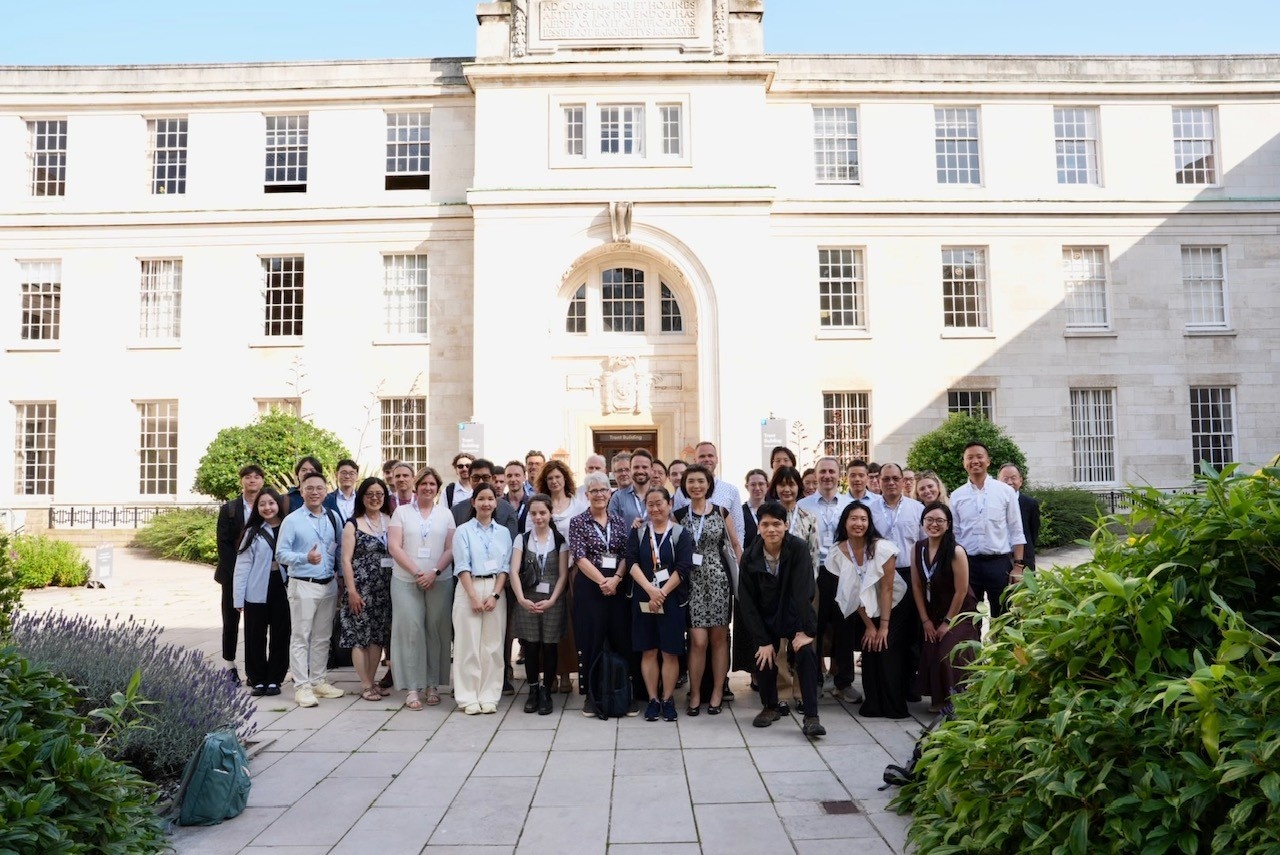


From 22–24 June 2026, researchers from the Supply Chain Resilience Center (SCRC) participated in the Taiwan Research Hub Joint Conference 2026 at the University of Nottingham. Held under the theme “Navigating Technological Futures: Power, Resilience, and Strategy in a Multipolar World,” the conference brought together leading scholars from Europe and Asia to discuss the rapidly evolving relationship between technology, geopolitics, innovation, and economic security. The conference was jointly organized by the Taiwan Research Hub at the University of Nottingham and partner institutions from Taiwan, including National Tsinghua University, Taipei Medical University, National Sun Yat-sen University, and the Supply Chain Resilience Centre.
The conference programme demonstrated the growing centrality of semiconductors and advanced technologies in global politics and economics. Panels addressed topics such as supply-chain diversification, semiconductor diplomacy, industrial policy, critical minerals, AI governance, technology competition between the United States and China, and the role of middle powers in shaping emerging technological orders. Researchers affiliated with the Czech branch of the SCRC contributed actively to the conference programme, presenting research on European technology governance, semiconductor resilience, technological sovereignty, and Czech–Taiwan cooperation.
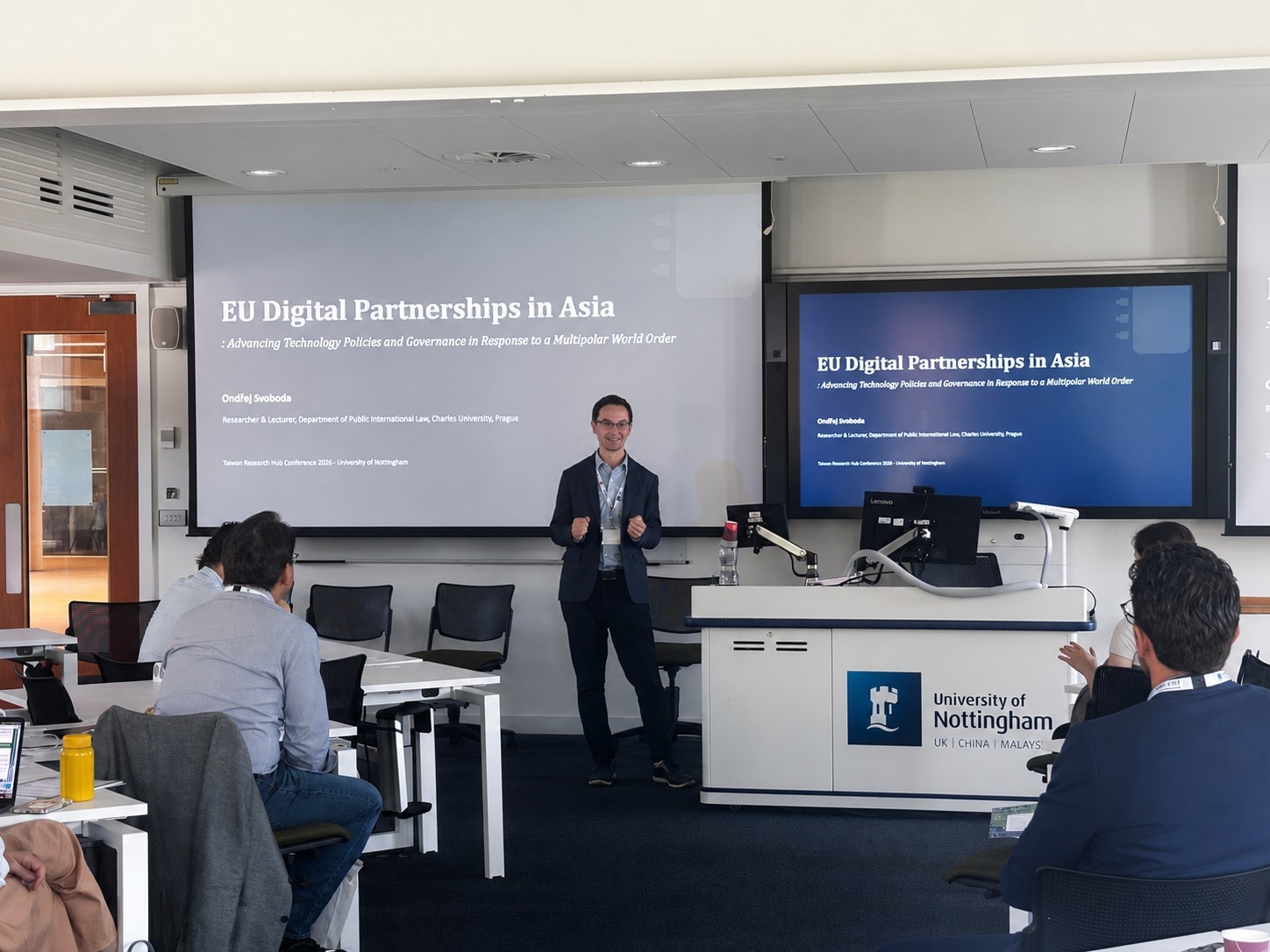
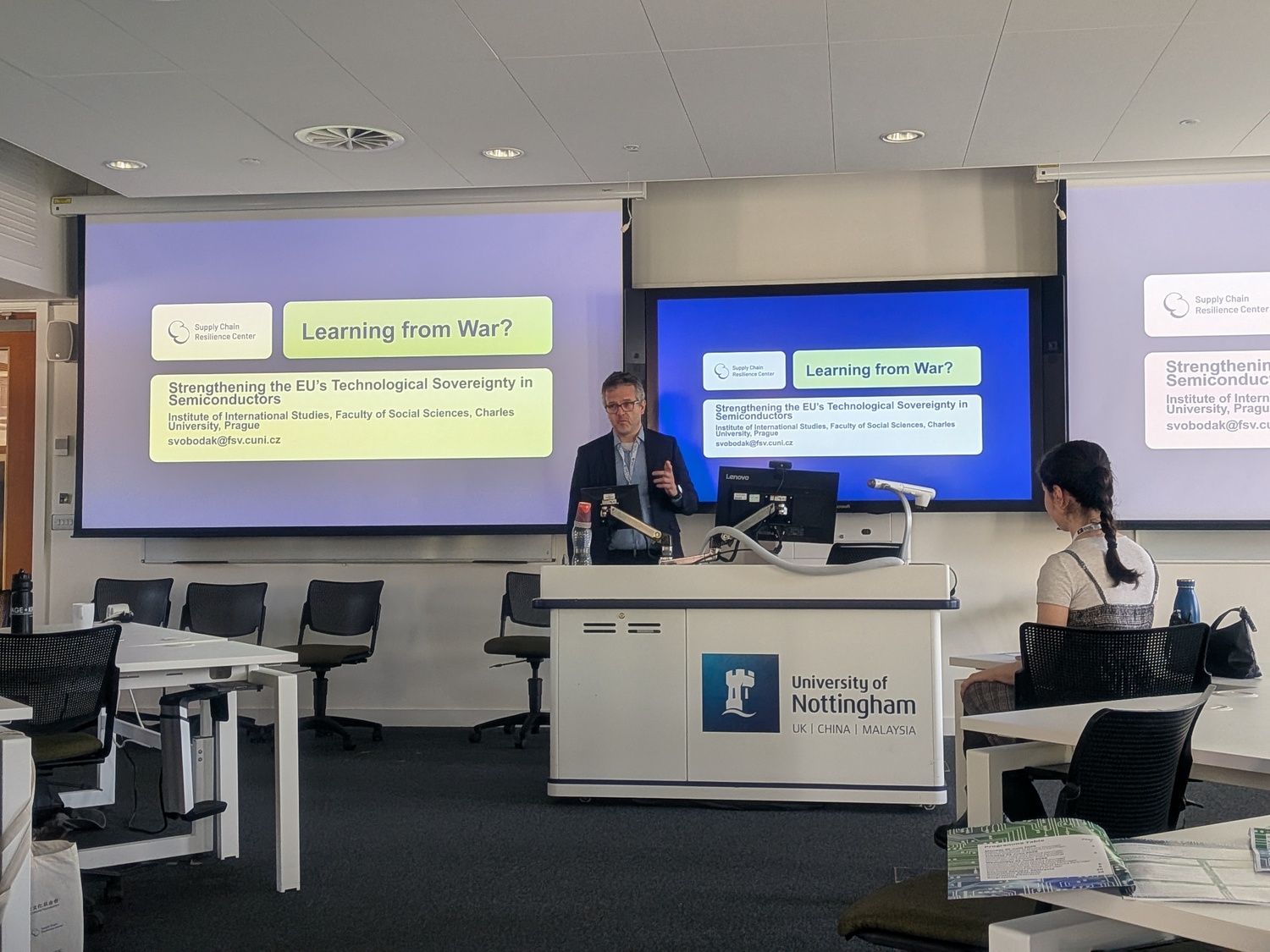
Dr. Ondřej Svoboda presented a paper titled EU Digital Partnerships in Asia: Advancing Technology Policies and Governance in Response to a Multipolar World Order. The presentation examined how the EU is using digital partnerships to strengthen international cooperation, promote technology standards, and respond to increasing geopolitical fragmentation in the digital sphere, particularly in semiconductor industries. Technological Sovereignty in Light of Russia’s Full-Scale Aggression Against Ukraine: Geoeconomic Implications for the EU was presented by Dr. Karel Svoboda. His research highlighted the growing importance of technological sovereignty and resilience in the context of European security and changing geopolitical realities. Dr. Adam Horálek presented a study Czech Defence Industry and Semiconductor Resilience: Analysis of Semiconductor Policy Aims and Perception of Resilience in a Multi-Actor Perspective, addressing the strategic significance of semiconductors for both industrial competitiveness and national security, with a particular focus on the Czech context. Finally, Dr. Coleman Mahler introduced a topic Taiwan’s Semiconductor Diplomacy: Czech–Taiwan Relations and the Restructuring of Global Supply Chains. The paper explored how semiconductor cooperation has become an increasingly important dimension of Czech–Taiwan relations and examined its implications for broader shifts in global supply-chain governance.
The conference provided an excellent platform for exchanging ideas with scholars from Europe and Asia and for strengthening research networks in areas of growing strategic importance as particular attention was given to the resilience of technology supply chains and the challenges associated with reducing strategic dependencies while maintaining international cooperation and innovation. These issues resonate strongly with the research agenda of SCRC, which focuses on understanding and strengthening resilience across critical economic and technological sectors. The participation of Prof. Wen-Ling Tu, Co-PI of the SCRC, and other researchers at the conference highlights the Centre’s growing engagement in international debates on economic security, technological governance, and supply-chain resilience.
All group photos are courtesy of University of Nottingham.
All presentation photos are courtesy of Dr. Ondřej Svoboda.